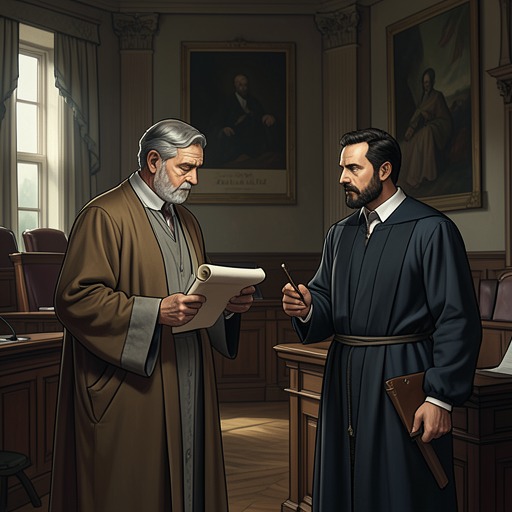
God–Abraham relationship
Don't Leave God Alone: How to Get God's Attention, Remain in His Presence, and Even Change His Mind to Make a Difference in Your WorldThe God–Abraham relationship is portrayed as a friendship in which revelation creates responsibility: God does not merely announce judgment, but speaks with Abraham before the destruction of Sodom and Gomorrah, giving him an opportunity to plead for mercy. Abraham responds boldly, yet ultimately stops short of the persistence the book believes could have preserved the cities. Their relationship thus embodies both intimacy and testing—the privilege of being told what God intends, and the obligation to continue speaking when judgment appears settled.
Friendship and Revealed Judgment
God’s relationship with Abraham is defined first by trust and disclosure. Before destroying Sodom and Gomorrah, God considers whether to conceal His intention from Abraham, described as His friend and servant. The book treats that disclosure as significant: if destruction had been the only possible outcome, God could have acted without explaining anything. By telling Abraham what was about to happen, God appears to open a space for intervention and to invite Abraham into a conversation about justice and mercy.
That conversation places Abraham between God and the threatened cities. The relationship is not presented as passive devotion or silent acceptance. Abraham’s closeness to God gives him access to a difficult matter, while the revelation itself imposes a moral burden. He must decide whether to let God proceed or to stand in the way of judgment on behalf of people whose rescue is not guaranteed.
Abraham’s Intercession
Abraham begins by challenging the apparent justice of destroying the righteous with the wicked. He asks whether the Judge of all the earth would treat the two alike and proposes that the cities be spared for the sake of fifty decent people. God agrees to that condition, and Abraham continues reducing the number. The exchange moves through successive thresholds until Abraham asks whether the cities would be spared if ten righteous people could be found.
The book emphasizes the physical and verbal boldness of Abraham’s approach: he stands in God’s path and confronts the proposed judgment rather than withdrawing from it. His counting is not treated as a detached calculation. Each number represents another attempt to locate a basis for mercy, and each divine agreement confirms that God is willing to hear Abraham’s appeal. The relationship therefore appears dialogical, with Abraham’s requests altering the stated terms of judgment.
Abraham’s appeal also resembles the earlier example of Moses, who refuses to leave God alone concerning Israel and prays until judgment is withheld. The comparison establishes persistence as the decisive difference between the two intercessors. Abraham begins the work of pleading, but he does not carry it to the smallest possible claim.
The Cost of Stopping at Ten
The crucial rupture occurs when Abraham stops counting. The narrative highlights the statement that the Lord went His way and Abraham returned to his own place. In the book’s interpretation, this is not merely the end of a conversation; it is the moment Abraham leaves God alone. The cities are then destroyed, and the destiny of two communities is connected to the point at which one intercessor ceased pressing the case.
The author argues that Abraham could have continued by asking God to spare the cities for one righteous person, perhaps appealing even to Lot, his nephew. This possibility is presented as a serious theological counterfactual rather than a minor detail. Since the book has already claimed that Moses’s persistence moved God to spare Israel, it sees no essential difference in Abraham’s situation except that Abraham quit counting while Moses persisted.
The consequence is therefore framed as relational as well as historical. God had given Abraham an opening to plead, and Abraham used that opening only partially. Once God departed, Abraham also left the place of confrontation. The destruction of Sodom and Gomorrah becomes the negative counterpart to the mercy associated with Moses: one man’s continued cry might have changed the outcome, but Abraham’s early withdrawal allowed judgment to stand.
A Model for Persistent Prayer
The relationship is used to teach that God is looking for people who will provide a reason to intervene even when judgment appears deserved. The book does not portray God as obligated to grant every request; instead, it presents intercession as the human response God seeks when mercy remains possible. Abraham’s experience becomes a warning that an initial answer or concession is not necessarily the end of prayer. The decisive failure is not that Abraham began wrongly, but that he stopped before exhausting the appeal.
This interpretation is connected to the book’s wider principle of not leaving God alone. Persistence means remaining before God, continuing to ask, and refusing to accept apparent finality when people or circumstances still need mercy. The same principle is applied to deliverance, healing, national crisis, and personal salvation: believers are urged to use the Word of God and the name of Jesus, stand their ground, refuse to give up, and remain connected to an anointed pastor while seeking freedom.
The relationship also clarifies the book’s understanding of prayer as importunity. Importunity is described as shameless, bold, determined, pressing, entreating, and persistent. Jesus’s teaching about the friend at midnight and the command to pray without fainting are read through this lens. Abraham’s exchange with God supplies the biblical image behind that teaching, but his stopping at ten shows what happens when boldness gives way to resignation.
Theological and Narrative Significance
God and Abraham are neither depicted as distant ruler and silent subject nor as equals negotiating on ordinary terms. God retains authority to judge, while Abraham receives the unusual role of pleading against the consequences of that judgment. Their relationship is intimate enough for God to disclose His plan and open enough for Abraham to question it. The drama lies in the tension between divine sovereignty and human intercession: the book insists that God can act without Abraham, yet also insists that God looks for someone willing to ask Him to act mercifully.
The story’s final force comes from its contrast with Moses and from its application to contemporary prayer. Moses’s refusal to leave God alone saves a nation in the book’s reading; Abraham’s refusal is incomplete, and two cities are lost. That contrast turns Abraham from a simple model of faith into a figure of unfinished intercession. He demonstrates that courage can begin a prayer, but only persistence can carry it through the final and most difficult request.
The God–Abraham relationship consequently functions as both promise and warning. God is presented as willing to hear the cry of one person, even when mercy is not required by the immediate circumstances. Yet the opportunity must be met with continued engagement. For the book, Abraham’s story asks believers to remain present before God on behalf of others, because leaving too soon may surrender the very possibility of change.